

Dubai unveils Virtual ICU at GITEX Global 2025 to revolutionise critical care
Al Jalila Children’s Hospital tests AI-powered monitoring system for critical patients

DUBAI – Dubai Health has launched an ambitious pilot project introducing a Virtual ICU, an artificial intelligence-powered system designed to transform intensive care through real-time patient monitoring.
The initiative, being tested at Al Jalila Children’s Hospital, uses advanced cameras and data analytics to detect early signs of patient distress and instantly alert nurses.
The technology was unveiled ahead of GITEX Global 2025, where Dubai Health will showcase its latest AI-driven innovations that promise to reshape the healthcare experience in the emirate.
— Dubai Health (@DubaiHealth) October 14, 2025
How the system works
According to Hend Majed Al Abbar, Director of the AI Enablement Department at Dubai Health, the Virtual ICU integrates AI cameras with the health authority’s unified electronic medical record system, Salama. These cameras analyse patients’ movements, facial expressions, and skin tone in real time, automatically flagging any abnormal changes to medical staff.
The ten-bed pilot programme is also being remotely monitored by specialists at the National Children’s Hospital in Washington, D.C., enabling around-the-clock supervision and knowledge sharing. The system is expected to go live in December 2025, after which results will determine its expansion to other intensive care units across Dubai’s hospitals.
How will it benefit critical care?
By combining visual analytics with clinical data, the Virtual ICU strengthens patient safety and enables faster interventions – potentially reducing hospital stays and improving survival rates. The AI system continuously records vital signs such as heart rate and blood pressure, ensuring even subtle physiological changes are detected promptly.
Al Abbar said the goal is to support, not replace, healthcare professionals: “AI enables us to identify distress early, act quickly, and improve outcomes for critically ill patients.” Similar virtual care models have already been adopted in several leading US hospitals.
Other AI breakthroughs
Dubai Health is also piloting Virufy, an AI-powered smartphone app that analyses breathing and cough sounds to predict respiratory illnesses. Currently under research at Nad Al Hamar and Al Barsha Clinics, the project is a collaboration with Dubai Future Solutions’ Prototypes for Humanity programme. Data from these clinics will help evaluate its predictive accuracy before wider rollout.
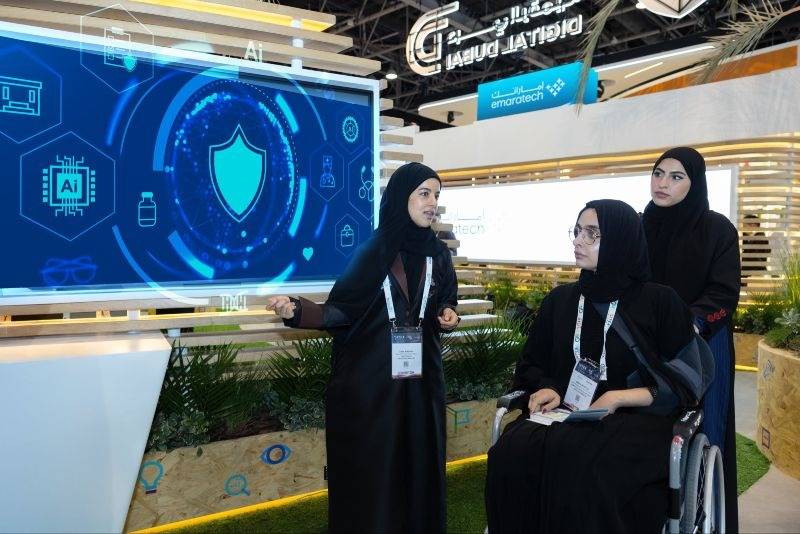
Another highlight at GITEX is Agentic AI for MBRU Admissions, a generative AI virtual assistant providing 24/7 support for applicants at the Mohammed Bin Rashid University of Medicine and Health Sciences (MBRU). The system handles queries on registration, scholarships, and requirements through chat and phone interaction, streamlining the admissions process.
These digital health projects reflect Dubai Health’s commitment to advancing AI integration across its system, in line with the Dubai Social Agenda 33 and Dubai Digital Strategy.